Important acquistion for Dorset History Centre
A 13th-century royal charter that bestowed privileges on Forde Abbey, including exemption from taxes, thanks to a FNL grant.

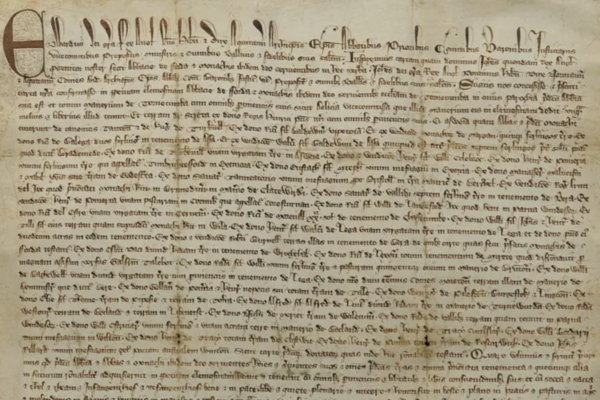
Royal inspeximus charter of Edward II (1284-1327), 1313 relating to Forde Abbey in Thorncombe, Dorset.
This is important and rare document illuminates the relationship between a major religious house and the monarch. It details and confirms the contents of an earlier charter (King John, 1204). One of the witnesses, William Longspée, Earl of Salisbury was the grantor of Poole’s earliest known charter in 1248 held at Dorset History Centre (DHC).
DHC already holds various collections relating to Forde Abbey including a charter of 1545 granting lands post-Dissolution and the Forde Abbey estate archive (1576-1907) which contains family and estate records.
Forde Abbey was originally founded at Brightley in Devon by Richard FitzBaldwin, Lord of the Honour of Okehampton, in 1136. He obtained 12 monks from the Cistercian house of Waverley in Surrey, who returned after five years, having found the site impossible to cultivate. Richard’s sister and heiress Alice immediately re-founded the abbey in 1141, giving the church and manor of Thorncombe, the first of many gifts recorded in this charter.
The charter relates how the King inspects a charter of his great-grandfather King John of 10 October 1204, which confirms the grants of Forde’s second founder Alice of the church and manor of Thorncombe near Chard, the gift of Henry II of land in Street, purchases from the canons of Taunton and the Cistercians of Margam in Glamorgan, and many other acquisitions including land on Exmoor, a house in Exeter and another near Bristol; the king goes on to grant the monks many judicial privileges, including infangthief and outfangthief (the right to try and punish thieves), and immunity from a host of taxes and impositions including Danegeld, scutage, tolls, castle and bridge-works and pleas of the forest.
The acquisition builds knowledge and evidence of the very early years of the abbey as a monastic institution.